
Apartment construction in the Philippines often requires concrete to travel through a constrained chain of production, delivery, pumping, and placement. The challenge becomes more pronounced as buildings rise and available ground space diminishes. Dense residential districts may provide limited room for mixer trucks, while narrow access roads, neighboring structures, overhead utilities, and active traffic can restrict equipment positioning. For apartment projects, concrete placement therefore needs to be planned around the actual geometry of the site rather than around equipment capacity alone. The selected pumping method should correspond to the building height, pour volume, access conditions, pumping distance, work sequence, and expected continuity of concrete supply.
Different construction stages can also require different concrete pumping arrangements. A foundation pour may favor one system, while upper-floor slabs or columns may demand another. Instead of assuming that one machine must serve the entire project, contractors can evaluate the concrete route at each stage and select equipment according to the prevailing constraint. This approach makes concrete placement more adaptable and helps prevent equipment access, pumping distance, or interrupted supply from becoming a hidden bottleneck.
Plan Concrete Placement Around the Apartment Site Layout
Ground-Level Access Determines Where Concrete Can Enter
The first consideration is the point where concrete can physically reach the project. Apartment sites may have narrow entrances or limited internal space because of property boundaries, temporary fencing, neighboring buildings, and other construction equipment. A mixer truck may be able to approach the site entrance but still remain too far from the actual pour.
In this situation, contractors can separate the concrete delivery point from the placement point. Concrete is discharged where the delivery vehicle can safely position itself, then transported through a pumping line to the foundation, slab, column, or wall being constructed. This simple change in site logistics can make a constrained plot much more workable.

Building Geometry Changes as Construction Progresses
An apartment project rarely maintains the same concrete route throughout construction. During foundation work, the primary concern may be excavation depth and horizontal pipeline length. Once the structural frame rises, vertical pumping and floor-to-floor access become more important. Later, completed structures may further restrict ground-level vehicle movement.
Concrete Planning Should Follow Construction Stages
Rather than fixing the pumping arrangement at the beginning of the project, contractors can review equipment requirements according to each major pour. This staged approach allows the pumping method to evolve as the building footprint, elevation, and access conditions change.
Match Pumping Equipment to the Type of Pour
Concrete Boom Pumps Suit Large or Elevated Placement Areas
A concrete boom pump for sale can be useful when apartment construction requires concrete to reach elevated or difficult-to-access areas from a relatively fixed truck position. The articulated boom provides a controlled placing route and can reduce the need for extensive manual hose handling. This can be particularly relevant for large slabs, structural frames, and multi-floor construction where the placing point changes across a broad working area.
However, contractors still need to examine the available setup space, boom reach, obstruction clearance, and truck positioning requirements. A boom pump is not simply selected according to building height. The actual geometry between the machine and the placing area determines whether its reach is suitable.
Concrete Mixer and Pump Systems Combine Production With Placement
Smaller apartment developments may have a different requirement. When concrete demand is moderate and the project has limited space for separate machinery, a concrete mixer and pump can combine mixing and pumping in one workflow. The system can produce concrete and deliver it through a pipeline toward the required placement area, reducing the number of separate equipment interfaces on the site.
Integrated Equipment Can Simplify Intermittent Concrete Work
This arrangement can be particularly relevant when concrete is needed for foundations, columns, beams, retaining walls, or smaller slab sections at different times. Instead of maintaining separate mixing and pumping operations for relatively modest pours, contractors can coordinate production and placement through one compact system.
Portable Concrete Pumps Fit Changing Work Zones
A portable concrete pump can provide flexibility when the pumping position needs to change between construction stages or when a truck-mounted boom pump cannot occupy the required location. Its compact arrangement can allow the pump to remain at an accessible position while pipeline sections extend toward the actual work area.
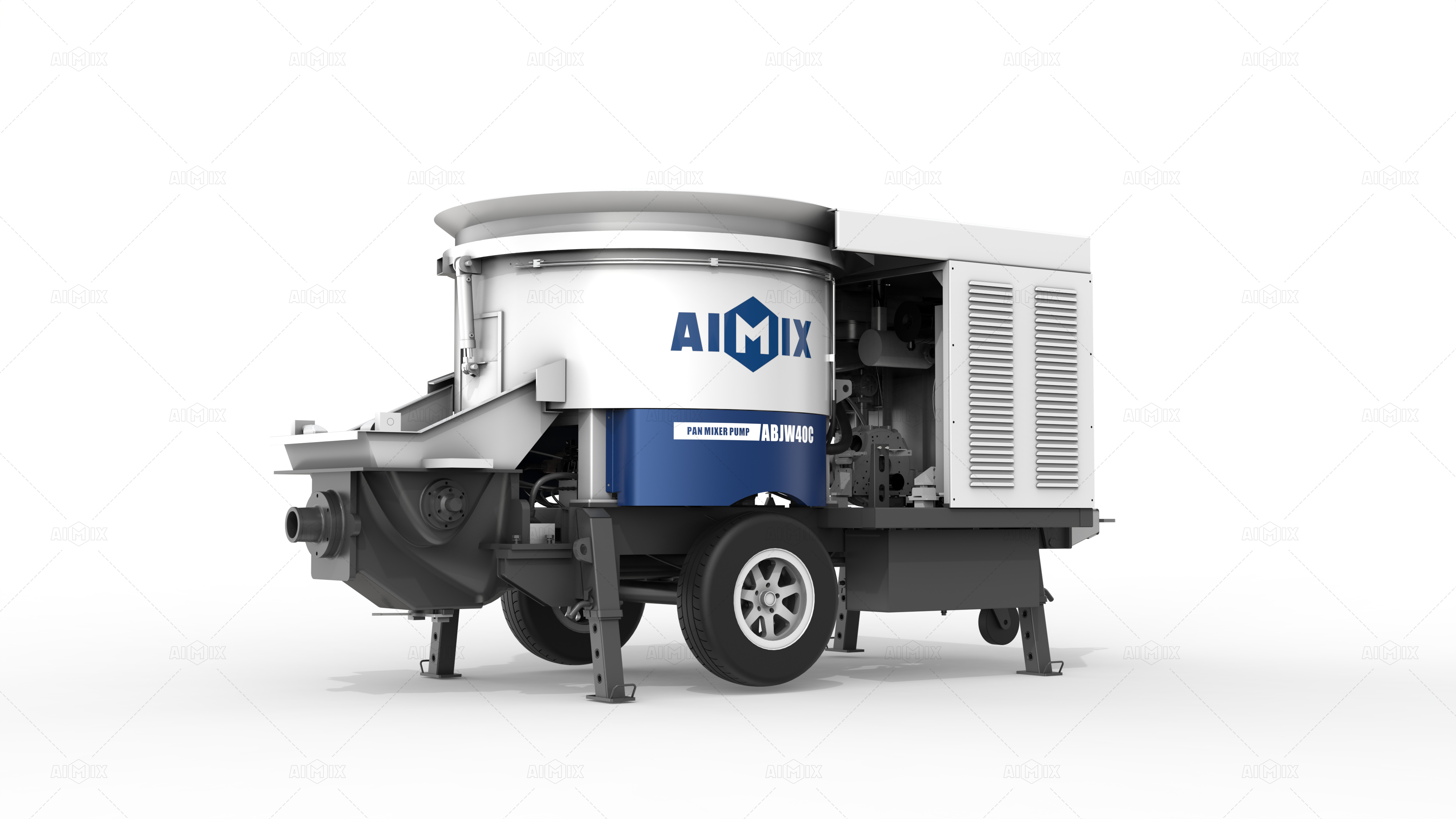
For apartment projects with narrow plots, this configuration can be valuable because the pump itself does not need to follow every change in the placing point. The pipeline can instead form the bridge between an accessible equipment position and the concrete placement zone.
Use Stationary Pumping for Repeated Vertical Delivery
Stationary Pumps Suit Structured High-Rise Pumping Routes
As an apartment building rises, repeated vertical concrete delivery can become a defining logistical issue. A stationary concrete pump for sale in the Philippines can remain at a designated ground-level position while concrete travels through a pipeline toward higher floors. This arrangement avoids repeatedly positioning a large vehicle near each placement area and can support a more systematic pumping route.
Pipeline Design Becomes Part of the Construction Plan
For stationary pumping, contractors should establish the pipeline route before major pours begin. Vertical sections, horizontal runs, bends, pipe diameter, support points, and the final placing arrangement all influence pumping conditions. A poorly planned route can create unnecessary resistance and complicate maintenance, even when the pump itself has sufficient theoretical capacity.
Continuous Supply Must Match the Pumping Rate
Apartment concrete placement also depends on synchronization between concrete arrival and pumping. If the pump is ready but concrete supply is interrupted, the pour can lose continuity. Conversely, excessive delivery without sufficient placing capacity can create congestion around the discharge area. The concrete supply rate, pump output, crew size, and placement sequence should therefore be planned as a single operational cycle.
Coordinate Concrete Placement With the Overall Work Schedule
Equipment Positioning Should Protect Other Construction Activities
Concrete placement rarely occurs in isolation. Cranes, reinforcement crews, formwork teams, material deliveries, and workers may all require access to the same area. The pumping system should occupy as little critical circulation space as practical while leaving clear routes for essential construction activities.
Different Pours May Justify Different Pumping Solutions
There is no requirement for every apartment project to use one pumping method from foundation to roof. A boom pump may handle a large structural pour, a concrete mixer pump may suit smaller concrete works, a portable pump may address changing access conditions, and a stationary pump may support repeated vertical delivery as the building rises.
The central planning principle is straightforward: concrete placement should follow the project’s physical constraints. By assessing access, elevation, pour volume, pipeline geometry, equipment footprint, and supply continuity at each construction stage, Philippine apartment contractors can establish a concrete delivery system that remains workable as the building changes from excavation to structure and eventually to upper-floor construction.
Comments
No comments yet. Be the first to react!