
Tire pyrolysis projects face regulatory risks across feedstock handling, thermal processing, emission control, and by-product management. A plant may meet its production targets yet encounter delays or penalties if its operating practices conflict with environmental permits or waste management requirements. A systematic compliance audit helps identify these weaknesses before commissioning and maintain regulatory control during commercial operation.
Feedstock Acceptance and Waste Classification
End-of-life tires are the primary feedstock for tire pyrolysis plant. However, their collection, storage, transport, and processing may fall under different waste management requirements. Project developers must confirm how local regulations classify waste tires and whether the facility holds the necessary permits to receive and process them.
Feedstock inspection is an important first step. Incoming loads should be checked for prohibited materials, excessive contamination, and unexpected waste streams. Mixing tires with municipal waste, electronic waste, or other unauthorized materials may alter the project’s regulatory status. The facility should maintain supplier records, weighbridge data, delivery documents, and inspection logs to establish traceability.
Storage conditions also require attention. Large tire stockpiles can create substantial fire loads and obstruct emergency access. The audit should examine storage limits, separation distances, fire prevention measures, drainage, and procedures for managing damaged or contaminated tires.
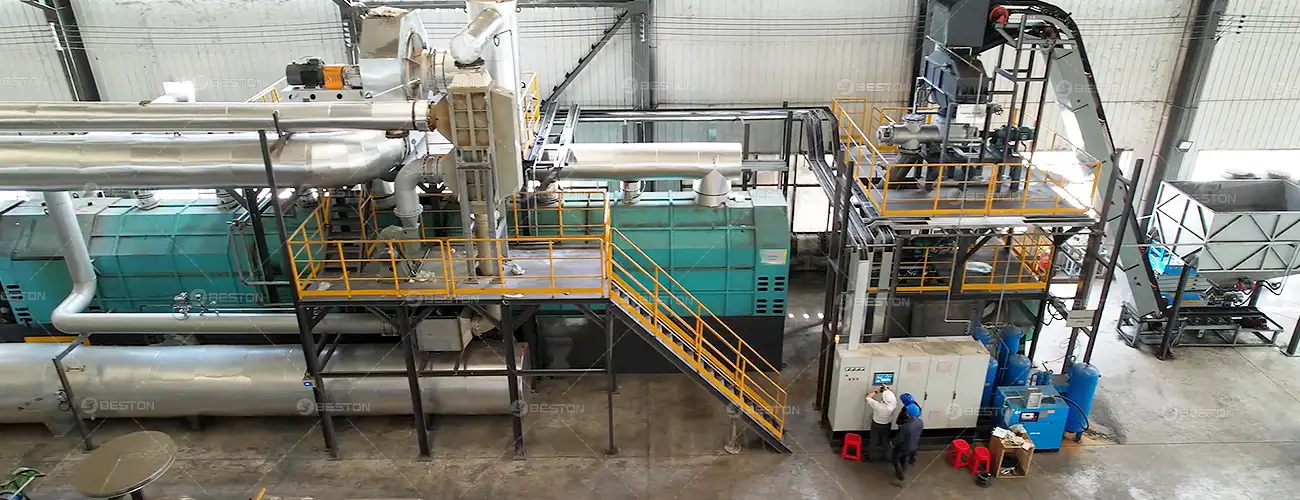
Reactor Integrity and Process Safety
Tire pyrolysis machine relies on thermal decomposition under oxygen-limited conditions. The reactor, feeding system, gas pipeline, condenser, and residue discharge equipment must operate as an integrated system. A defect in one component can create both safety hazards and environmental noncompliance.
Sealing, Pressure, and Temperature Control
Air ingress can disrupt the intended reaction conditions, while combustible gas leakage can create fire or explosion risks. Auditors should inspect reactor seals, flange connections, valves, feeding devices, and discharge points. Pressure indicators, temperature sensors, alarms, and emergency shutdown functions should also be tested against documented operating procedures.
The audit should verify whether inspection and maintenance schedules reflect actual operating conditions. Repeated seal failures, unstable temperatures, or unexplained pressure fluctuations should be treated as warning signs rather than routine operating issues.
Preventive maintenance records, equipment inspection reports, and operator training documents provide evidence that process risks are being controlled. Safety procedures should cover startup, shutdown, abnormal pressure, power failure, and emergency isolation.
Emission Control and Exhaust Monitoring
Air emissions are among the most consequential compliance risks in tire pyrolysis. Potential pollutants depend on feedstock composition, reactor conditions, gas treatment, and the final combustion system. They may include particulate matter, sulfur compounds, nitrogen oxides, volatile organic compounds, and other hazardous substances.
A compliance audit should assess the entire gas pathway, from reactor outlets to condensation, treatment, and final combustion or discharge. The presence of an emission control device does not automatically demonstrate compliance. Its capacity, operating condition, maintenance history, and effectiveness must match the actual process load.
Verify Monitoring Against Permit Conditions
Environmental permits may specify emission limits, sampling methods, monitoring frequency, and reporting obligations. The audit should compare these requirements with available test reports and operating records. Where continuous monitoring is required, the system’s calibration, data retention, and alarm response should be examined.
Gas leakage, bypassed treatment equipment, and untreated exhaust during startup or shutdown deserve particular scrutiny. Auditors should also verify how the plant manages non-routine emissions and whether corrective actions are documented when results exceed internal or legal thresholds.
Pyrolysis Oil and Solid Residue Management
Tire pyrolysis produces liquid oil, non-condensable gas, and solid residue that commonly contains recovered carbon black and steel. Each output requires a clear management route.
Pyrolysis oil should not automatically be classified as a finished commercial fuel. Its legal status depends on applicable product specifications, waste regulations, and the intended end use. Before sale or off-site transfer, the operator should verify the relevant quality requirements and any permits governing storage, transport, and use. Storage tanks should have suitable containment, leak prevention, fire protection, and inventory controls.
Recovered carbon black and other solid residues also require characterization. Their composition and potential contaminants determine whether they can enter a specified reuse route or require further treatment. Steel recovery may create additional value, but contaminated material must still be handled according to applicable rules.
The audit should reconcile production volumes with sales, internal consumption, storage changes, and disposal records. Unexplained discrepancies may indicate inadequate inventory control or an undocumented waste stream.
Permit Consistency and Environmental Records
A frequent compliance weakness is the gap between the approved project design and the facility’s actual configuration. Changes to processing capacity, feedstock composition, operating hours, emission treatment, or product destination may trigger additional review or permit amendments.
Auditors should compare environmental approvals, construction documents, equipment specifications, and current operating practices. They should also check whether required environmental impact assessments, fire safety approvals, occupational safety procedures, and waste transfer records remain valid.
A practical audit prioritizes findings by severity, likelihood, and regulatory consequence. Immediate hazards require prompt intervention. Permit discrepancies and missing monitoring data need assigned corrective actions and clear deadlines. Lower-risk documentation gaps can be addressed through a controlled improvement plan.
Establish a Repeatable Compliance Review
Tire pyrolysis compliance is not a one-time commissioning task. Feedstock sources change, equipment wears, emission systems deteriorate, and product regulations evolve. Periodic internal audits help detect these changes before they lead to enforcement action or operational disruption.
A reliable review combines physical inspection, document verification, emission data analysis, and staff interviews. Each finding should identify the underlying cause, the required correction, the responsible person, and the evidence needed for closure. This approach turns compliance from a collection of permit documents into a measurable part of plant management.
Comments
No comments yet. Be the first to react!