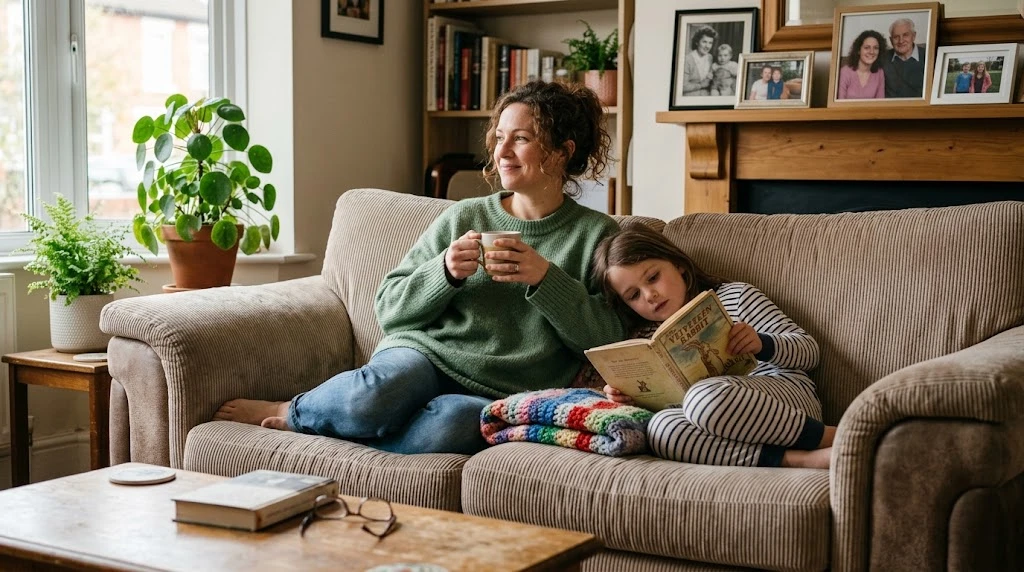
Run a hand along an old sofa and the history sits right there under your palm. Fabric goes thin where arms have rested for a decade. One cushion keeps the shape of a particular seated posture. Even the fading follows the pattern of the window light.
By any reasonable measure, the piece is due for replacement. Yet most owners stall at the thought of dragging it to the pavement. The hesitation is rarely about laziness or indecision. It reflects a bond built slowly through ordinary use.
That bond deserves a place in the decision alongside practical concerns. Sofa upholstery services exist partly for households caught between visible wear and real attachment. Repair keeps more than timber and cloth in circulation. It keeps a thread of continuity running through the room.
Restoration, looked at this way, is less a compromise than a tribute. It treats what the furniture has carried as worth carrying forward.
Comfort Built Slowly, Over Years
Consider the sheer variety of hours a living room sofa absorbs. It catches tired bodies after late shifts and restless bodies on sleepless nights. It holds homework sessions, long phone calls, and entire box sets. Few objects in a home are used so constantly.
That usage gradually tunes the piece to one household. Padding yields around a familiar spine. Textile softens at the exact points where hands and elbows land. Such comfort cannot be ordered from a showroom because it was not built there.
New seating, by contrast, stays rigid for months. It asks to be worn in before it gives anything back. Researchers describe our attachment in terms of the endowment effect, though seating adds a physical layer. The body relaxes before any conscious decision is made.
Weather adds another variable to that equation. Heat and humidity alter how padding settles and how textile ages, which is why Singapore sofa upholstery specialists survey conditions before recommending materials. Losing the piece means rebuilding all of that familiarity from zero.
The Cost of Treating Furniture as Temporary
Ownership patterns have shifted toward rapid turnover. Seasonal ranges and flat-pack convenience make whole rooms feel disposable. A stain, a tear, or a wobbly leg becomes sufficient reason to shop again. The outgoing piece leaves without much ceremony.
The long-term arithmetic tells a different story. Repeated cheap purchases quietly exceed the price of one considered restoration. Landfills collect synthetic foam and blended textile that outlast the households who bought them. Neither cost appears at the till.
Waste also conceals solid workmanship. Frames from earlier decades were commonly cut from hardwood and joined with care. Screws, dowels, and corner blocks were standard rather than optional. Underneath tired fabric, the structure often remains remarkably sound.
This is why some owners begin by asking sofa upholstery services to open a piece up before deciding anything. The report usually confirms that the bones have years left in them. Discarding that frame throws away both material and craft. It also ends a small, unrepeatable story.
Reupholstery, Layer by Layer
The rebuilding process starts with complete disassembly. Every covering, pad, and length of webbing comes away in turn. Only then does the true state of the frame become clear. Nothing is judged from the outside.
Technicians tighten joints and re-glue where movement has developed. Springs are examined and retied to recover their original tension. Failed foam is removed and replaced rather than topped up. Fresh batting restores loft and an even surface.
What the customer keeps is the outline they already know well. Proportions stay constant while the interior performs as though it were new. The sag goes without erasing the silhouette. Original craftsmanship survives instead of heading to a landfill.
Specification is where the piece meets the present. Colour, weave, cushion density, and protective finish are all chosen rather than inherited. Practitioners of Singapore sofa upholstery match those decisions to strong sunlight, humidity, and heavy traffic. The outcome suits the actual room.
Why the History Matters
Restoring furniture is also a way of keeping something that cannot be re-bought. Picture a sofa inherited after a family move, or the first big purchase made for a rented flat. Such items gather meaning quietly over long stretches of time. They rarely announce what they hold.
Perhaps a toddler steadied themselves against the armrest while learning to stand. Perhaps every bedtime story of a whole childhood happened in one corner of it. Those moments belong to that exact object in that exact room. A shop cannot supply an equivalent.
Keeping the piece keeps those stories within reach each day. Owners frequently work with sofa upholstery services to pick a fabric that suits how they live now. A loud period print can give way to a calm, durable weave. Nothing essential is disturbed.
To a visitor, the sofa looks entirely different. To the household, it is precisely where it has always been. That double reading is the reward for choosing repair over replacement.
Getting the Work Done Properly
Outcomes rest on who handles the job. Stripping and rebuilding demand training, patience, and a proper understanding of materials. A quick cosmetic fix will fail quietly over the next few years. Choose people who can talk fluently about frames and textiles.
Urban logistics deserve attention too. Stairwells are narrow, lifts are small, and storage barely exists. Established sofa upholstery services handle collection, assessment, and a written scope of work so the household is not managing chaos. That reliability is part of the craft.
Regional conditions shape the technical choices on every job. Southeast Asian humidity invites mould and shortens the working life of ordinary materials. Selecting Singapore sofa upholstery experience brings access to cloths and paddings tested against tropical conditions. Breathability and stain resistance matter as much as colour.
Put direct questions before committing to anything. Ask how frames tolerate damp seasons and how seams age under constant use. Specific answers suggest genuine depth of practice. Vague ones suggest a shorter repair ahead.
Choosing to Keep
Our attachment to old sofas is straightforward once you name it. Their shape records our habits and their surfaces record our years. They hold resting, gathering, illness, and celebration alike. Ordinary things, kept close, turn out to matter.
Restoring one is a modest response to pressure to replace constantly. It treats durability and honest materials as worth defending. It keeps patient handwork alive in a market built on speed. Small choices, repeated across many homes, add up.
Repair lets that attachment continue while the room moves forward. The comfort you already trust stays, and the tired surfaces finally go. Household after household reaches the same conclusion once the frame has been inspected.
Before replacing a worn sofa, ask what is genuinely wrong with it. The answer is often smaller than it first looked. Skilled attention can return years of service to the piece. Then it simply keeps doing what it has always done.
Comments
No comments yet. Be the first to react!